

Hosting a party often comes down to timing: you want the first guest and the last plate to enjoy food that’s hot, safe, and appetizing.
The key isn’t to keep cooking after guests arrive—it’s to hold finished dishes at the right temperature with tools designed for the job.
Safe hot holding protects flavor, texture, and food safety. With a bit of planning and a few reliable pieces of equipment, you can keep entrées, sides, and sauces ready to serve without stress.
Why Safe Holding Temperatures Matter
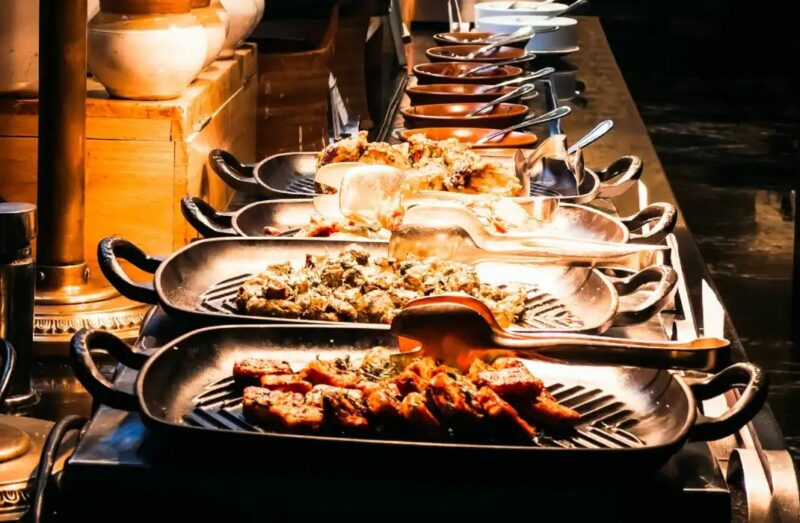
Bacteria multiply quickly between 41°F (5°C) and 135°F (57°C), often called the “danger zone.” When you hold food at 135°F (57°C) or above, you slow bacterial growth and keep dishes safe for guests over several hours.
This is especially important for proteins, cooked grains, sauces, and dairy-based items that sit out on a buffet.
Reheat any previously cooked foods to 165°F (74°C) before transferring them to holding equipment. Hot holding is about maintaining temperature, not cooking from raw.
The Right Tools for the Job
For longer events, catering equipment such as chafing dishes, insulated carriers, and induction warmers helps maintain safe holding temperatures.
Chafing Dishes
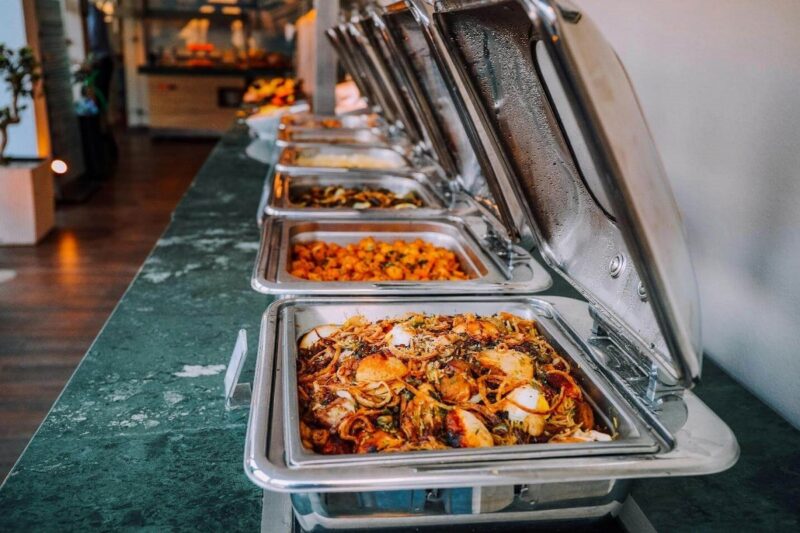
Chafers use indirect heat: a water pan, a food pan, and a controlled flame or electric heater.
The water creates gentle, even heat that prevents scorching and keeps moisture in the food. They’re ideal for saucy dishes, braises, pasta, scrambled eggs, and most sides.
Insulated Carriers (Hot Boxes)
laSource: giantex.com.auInsulated carriers trap heat to keep covered pans hot during transport or between service waves.
Use them as a staging area for backup pans so your buffet stays full while you swap in fresh, hot trays. Powered hot boxes add active heat for longer service windows.
Induction Warmers
Induction warmers deliver precise, responsive heat to induction-ready pans. They’re excellent for delicate sauces, carved meats, and items that benefit from tight temperature control and a low visual profile on the buffet.
Set Up for Success
A smooth service starts with smart staging. Focus on preheating, moisture control, and steady monitoring.
Preheat Everything
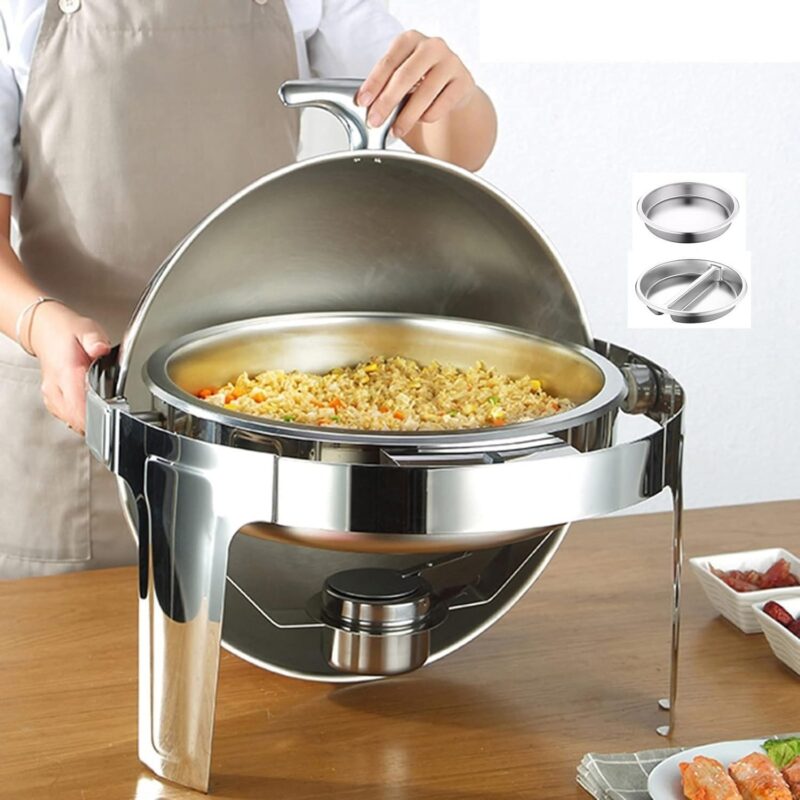
Warm holding gear before adding food. Fill the chafer water pan with hot water, light the fuel, and let steam build before inserting the food pan.
Preheat insulated carriers with a hot water pan or a heating brick. Set induction warmers to a hold setting before loading pans.
Manage Moisture and Texture
Lids keep heat and humidity in, which helps hold quality. For crispy toppings, hold components separately and assemble at the last minute.
Stir creamy items, grains, and saucy dishes every 15–20 minutes to keep heat even and textures smooth.
Monitor Temperatures
Use an accurate probe thermometer throughout service. Check the center and edges of the pan, and adjust heat if you see temperatures dropping toward 135°F (57°C).
Swap in fresh pans from a hot box rather than topping off a half-empty chafer.
Using Each Tool Safely and Effectively
Chafing Dishes: Gentle, Even Heat
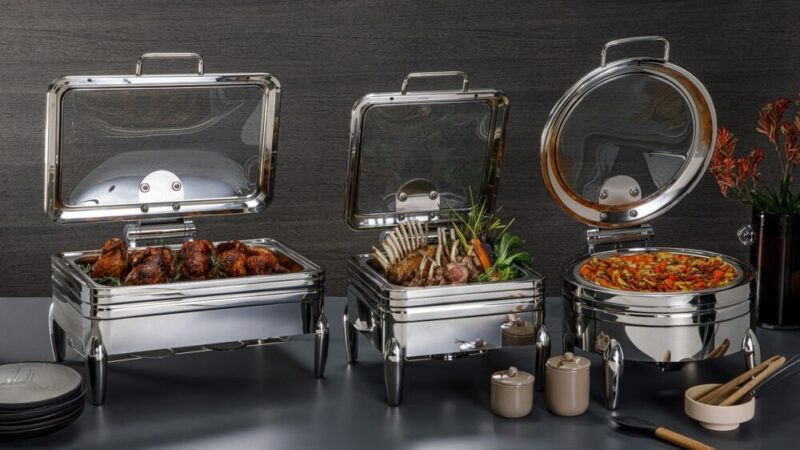
- Maintain 1–2 inches of hot water in the chafer water pan for stable steam heat.
- Keep lids on between guests to retain temperature and moisture.
- Use two smaller pans instead of one large one if traffic is slow; smaller volumes cycle faster and stay fresher.
Insulated Carriers: Hot Backups on Deck
- Load carriers with pans covered tightly in foil or snug lids.
- Avoid frequent door openings; group swaps so heat retention stays high.
- Rotate whole pans into the buffet rather than mixing old with new in the same container.
Induction Warmers: Precision on the Line
- Use induction-compatible, flat-bottom pans for consistent contact.
- Set to a “hold” or low-temperature setting that keeps food at or above 135°F (57°C) without simmering.
- For sauces and gravies, add a small amount of hot liquid periodically to maintain sheen and flow.
Buffet Layout and Flow
Position hot foods closest to their heat source and keep the path intuitive: plates first, proteins next, then sides, sauces, and garnishes.
Place utensils so guests don’t have to reach over chafers. If your menu includes both hot and cold items, separate them physically to keep equipment efficient and temperatures stable.
When possible, serve in small, full-looking pans and refill from your hot box often. This keeps food fresher, reduces heat loss, and looks more inviting than oversized pans sitting half empty.
Small Habits That Keep Food Safe
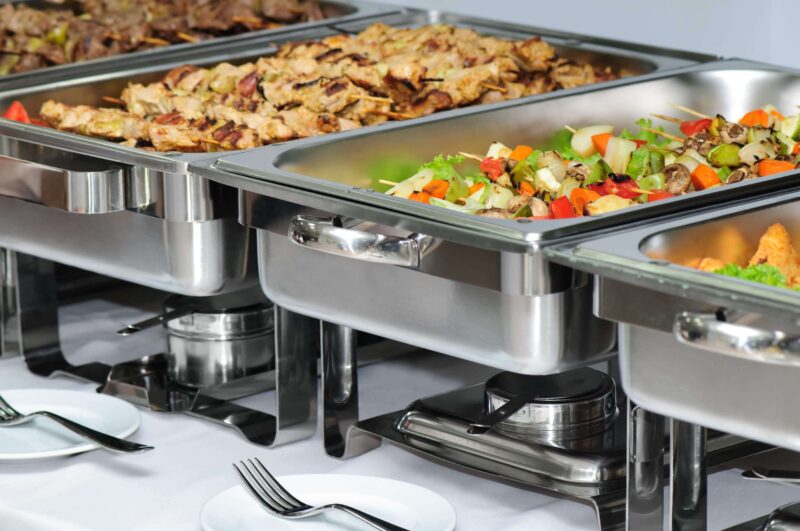
- Reheat to 165°F (74°C) before holding; then transfer immediately to preheated equipment.
- Replace serving utensils regularly, especially for proteins and dairy-based sides.
- Label pans with time-out markers so you know when to rotate or refresh.
Common Pitfalls to Avoid
- Running chafers dry: check water levels and refill with hot water as needed.
- Overfilling pans: deep pans heat slowly; use shallow pans for faster recovery.
- Constantly lifting lids: heat escapes quickly; keep lids closed between guests.
- Topping off old food: swap the whole pan to maintain quality and safety.
Planning Your Inventory
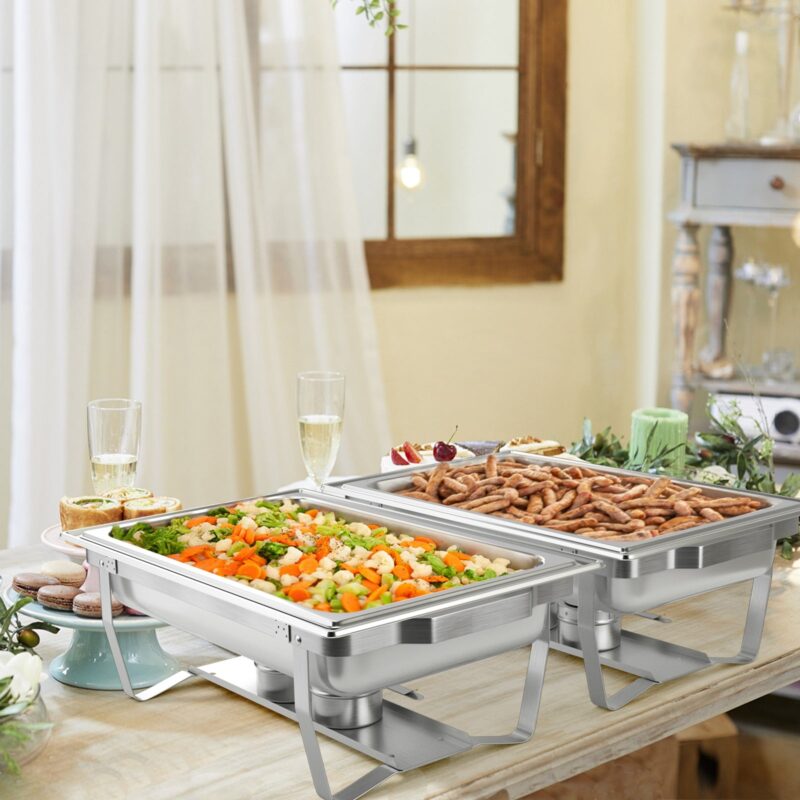
Match tools to the menu. Wet dishes, braises, and casseroles work well in chafers.
Carved meats and delicate sauces thrive on induction. Backups of everything live in insulated carriers so you can replenish fast.
If you’re comparing sizes, fuel types, and pan configurations, reviewing available catering equipment can help you map your setup to your guest count and menu flow without guesswork.
Cleaning and Turnover
Have extra hotel pans, lids, and utensils ready so you can swap quickly and return used gear to the dish area.
Wipe induction surfaces between pans, and keep chafer frames clear of spills to prevent odors and smoke.
At the end of service, let fuel cans cool fully before disposal and store equipment dry to preserve gaskets, hinges, and finishes.
Bringing It All Together
Keeping party food hot and safe isn’t complicated—it’s systematic. Preheat your gear, hold above 135°F (57°C), stage backups in an insulated carrier, and refresh pans on a steady rhythm.
With chafing dishes, hot boxes, and induction warmers working in tandem, you can focus on guests while every bite stays just-cooked good.